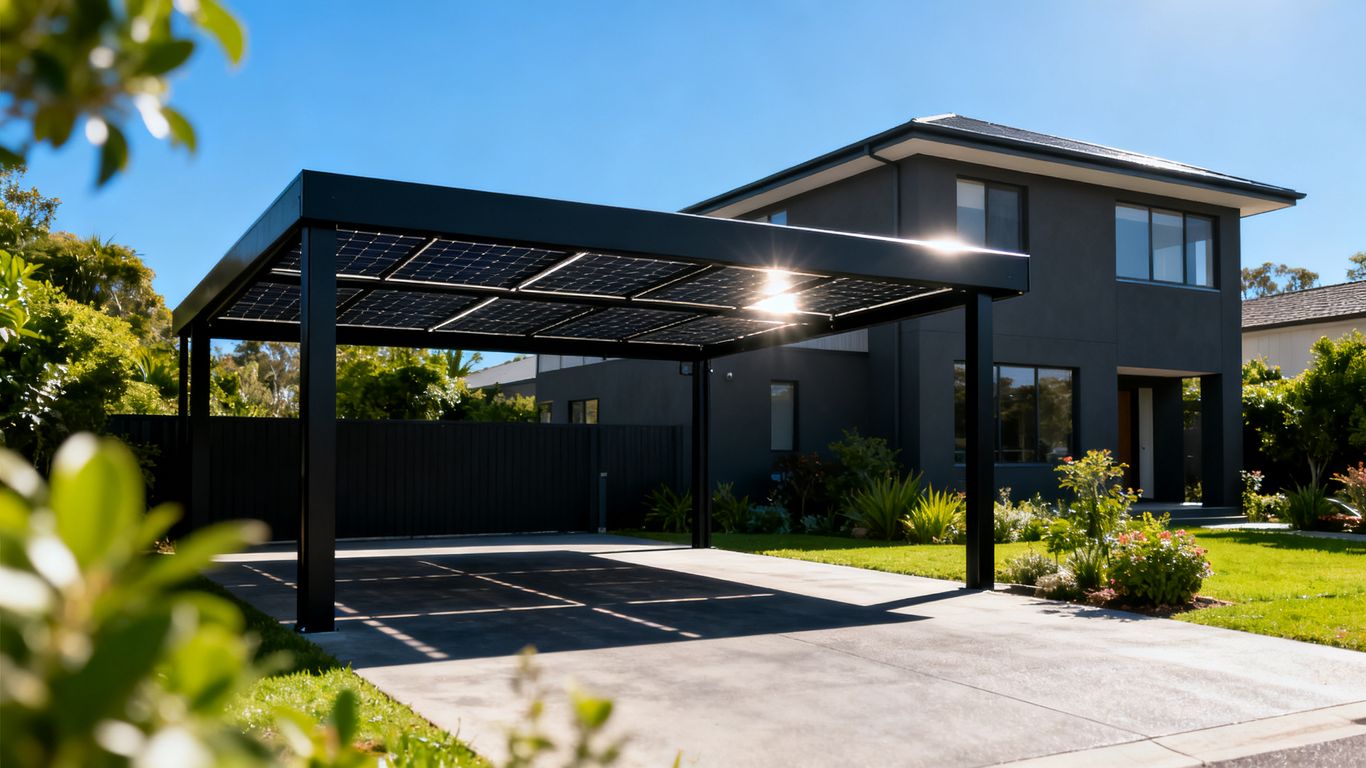
Do you dream of a solar carport without spending a dime out of your pocket? It’s an idea that’s gaining traction, especially with rising energy prices. We’ll explore together how it works, as while the term ‘free’ is a bit of a sales tactic, there are clever financial setups that make it super accessible. Hang on tight, we’re breaking it all down for you!
Key takeaways
- The ‘free solar carport’ is often a financial arrangement where someone else pays for the initial installation, or the subsidies reduce the cost so much that it costs you almost nothing.
- Several options exist to finance your project without any upfront investment: third-party investment (you lend your land, someone else builds and operates), an on-site PPA (you buy cheaper electricity), or the energy public service delegation (a complete service).
- Public aids, such as local grants, the self-consumption bonus, or reduced VAT, are your best allies to lower the final bill.
- To make your installation profitable, first think about consuming the electricity you produce (self-consumption). Selling the surplus is good, but less profitable than before.
- Don’t forget that even if the initial financing is covered, there are always steps to take, permissions to obtain, and the installation has a basic cost that varies according to size and options chosen.
Understanding the concept of a free solar carport
What is a free solar carport?
So, a free solar carport sounds great, right? The idea is to have a structure to shelter your car, which generates electricity from the sun, all without you having to pay a dime upfront. But let’s be honest, “free” is a bit of a shortcut. In reality, there’s no magic. What happens is that the initial cost of installation is covered by somebody else, or it’s so reduced thanks to grants and subsidies that it ends up costing you almost nothing. It’s like if a private partner or a local authority invested for you, in exchange for something, or the state gives you a financial boost.
The principle is simple: you provide a space, and a company installs and manages the solar carport. The electricity produced can be used to charge your electric car, power your home, or even be resold. Basically, it’s a smart way to benefit from solar energy without having to break the bank for the installation.
The different possible financial arrangements
For this solar carport to be “free” for you, several solutions exist. They allow costs and benefits to be shared:
- Third-party investment: This is sort of the most common arrangement. An external company finances, builds, and takes care of the maintenance of your carport. You just provide the land and can even receive a small fee. The company gets paid through the electricity generated or by selling advertising space on the structure.
- On-site PPA (Power Purchase Agreement): Here, you commit to buying the electricity produced by the carport at a price set in advance, often lower than the grid price. The investor covers the installation costs, and you enjoy cheaper and predictable energy.
- Energy DSP (Public Service Delegation): This is a more comprehensive solution, often used by local authorities. An operator takes care of the entire project, from installation to maintenance, including energy management and even integrating charging stations. You receive a complete service, and the operator is paid for the sale of energy or other services.
These arrangements can often be combined with public aids to make the operation even more attractive.
The benefits for municipalities and individuals
For municipalities, it’s a great opportunity to provide modern and eco-friendly infrastructures without straining their budgets. It allows equipping public parking lots, offering charging stations to citizens, and demonstrating a strong commitment to renewable energy. For you, as an individual, the benefits are numerous:
- No initial investment: You enjoy a shelter for your car and electricity production without spending money upfront.
- Reduction of your electricity bills: The energy produced can cover part, or even all, of your consumption.
- Enhancing your property: A solar carport adds value to your home, improves its energy performance rating, and can increase its value.
- Sustainable mobility: If you have an electric car, it’s the perfect opportunity to charge it with clean and economical energy.
In short, it’s a win-win solution that enables the democratization of solar energy and makes our cities and homes greener.
Solutions to finance your solar carport
So, you’re wondering how to get your own solar carport without breaking the bank? That’s a great question because yes, it does require a small investment upfront. But don’t worry, there are several ways to make this project accessible, even without a significant initial investment. Let’s take a look at this together, calmly.
Third-party investment: an option with no initial investment
Third-party investment is a bit like someone else covering part of your installation. Basically, a specialized company will finance the construction of your solar carport. You don’t have to spend anything initially. In exchange, you agree to buy the electricity produced by the panels at a price set in advance, often lower than what you would pay your usual provider. It’s a super interesting solution if you want to get started without spending money right away. The company takes care of everything: the installation, the maintenance, and you benefit from the electricity and the shelter for your car. It’s a win-win, right?
The on-site PPA: securing your energy cost
The PPA stands for ‘Power Purchase Agreement.’ The ‘on-site’ part means the installation takes place right at your place. The principle is quite similar to third-party investment: a company installs and finances the solar panels on your carport. You buy the electricity produced at a preferential rate for a set period, often 15 to 25 years. The main advantage? You protect yourself against future electricity price increases. Your energy cost is secured, and you know exactly how much you will pay. This is a significant peace of mind, especially with the fluctuations in the energy market. Plus, you benefit from locally produced green electricity.
The energy DSP: a complete service for your project
The DSP stands for Public Service Delegation. In this case, it’s a local authority (like a town hall or intercommunal authority) that will entrust the realization and operation of a renewable energy project, such as solar carports, to a private company. As an individual or business, you can benefit from this service. Often, the energy DSP offers a turnkey solution: installation, maintenance, and sometimes even management of the produced energy. This is a solution that can be offered as part of a larger project, for example on a public parking lot or in a business zone. It allows costs to be pooled and benefits from professional expertise for a significant project. This approach aims to develop solar energy on a larger scale while offering concrete benefits to end users.
Public aids to reduce your investment
Hello! So, you’re wondering how to reduce the bill for your solar carport project? Good news, there are several financial boosts to help you. It’s not always easy to find your way, but we’ll look at this together.
Local and regional grants
Each region, and sometimes even each department or municipality, has its own schemes to encourage renewable energy projects. These aids can take different forms: direct grants, zero-interest loans, or even tax exemptions. You really need to inquire with your municipal office or your region to find out what’s available in your area. Sometimes there are specific project calls that can fund part of your installation, especially if it fits into a sustainable development or self-consumption initiative.
The self-consumption bonus
This is a super interesting aid if you plan to consume part of the electricity produced by your carport. This bonus is paid in one go, and its amount depends on the power of your installation. To benefit from it, your installation must be less than 100 kWc, and you need to go through a certified RGE (Recognized Guarantor of the Environment) professional for the work. Oh, and you also need a Linky meter. It’s a great way to make your project more profitable quickly. You can find information on current amounts on the State’s website.
Reduced VAT for solar installations
This is an aid that applies to almost everyone! If your home is over two years old and you live there, you can benefit from a reduced VAT rate. Instead of the normal rate, you pay only 10% VAT on materials and installation. This applies whether you’re an owner or a tenant. For businesses, it’s a little different, but there are also schemes that can apply. It’s a significant saving that directly reduces the total cost of your project.
It’s important to thoroughly research the eligibility conditions for each aid. Often, you need to prepare a file and follow certain steps before starting the work. Don’t wait too long because these schemes can evolve or be limited in budget.
In summary, there are several ways to lighten the cost of your solar carport: local aids, the self-consumption bonus, and reduced VAT. Don’t hesitate to get in touch with the right contacts to prepare your file and maximize your chances of obtaining these funds.
Optimizing the profitability of your installation
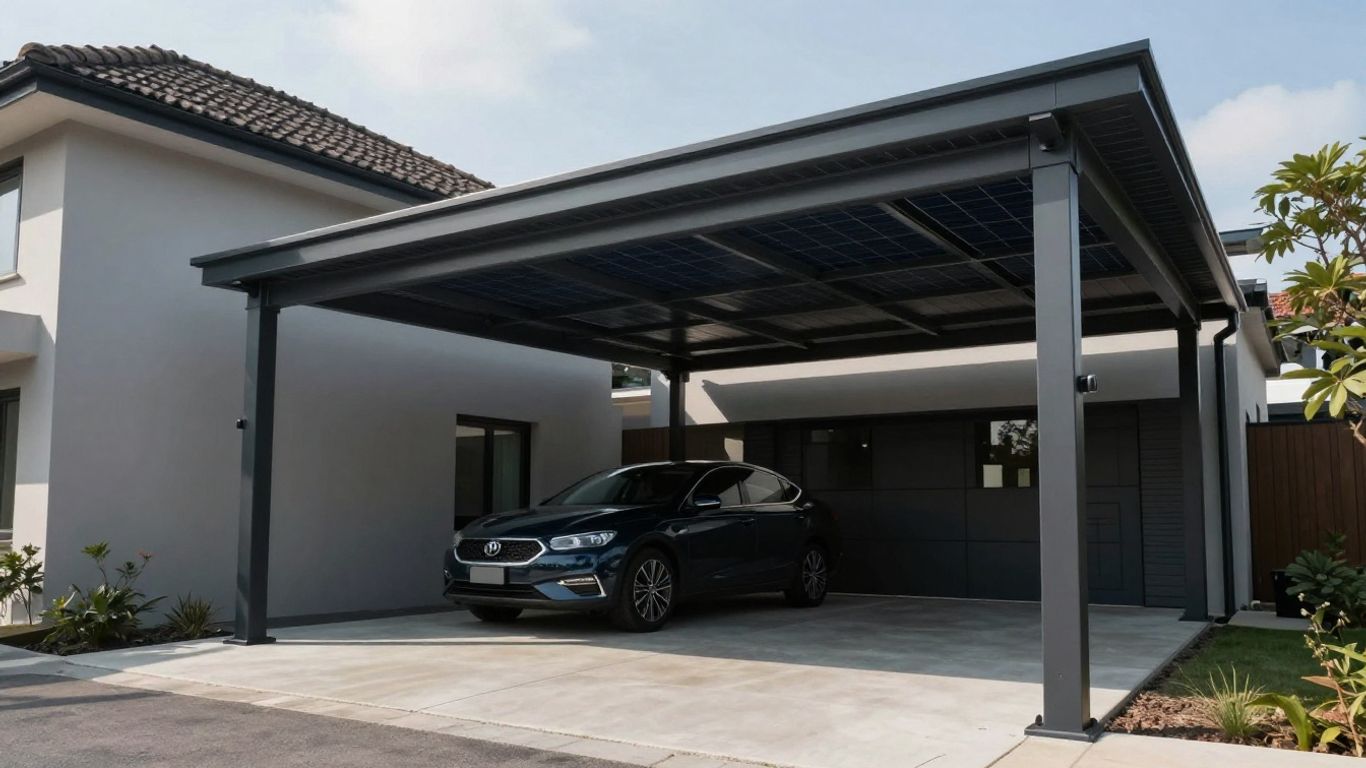
So, you have your solar carport project in mind; that’s great! But how to make it yield maximum profits? This is where we’ll see how to make your installation really profitable, not just a nice gadget.
Self-consumption: the main lever for profitability
The simplest way to start saving is to consume the electricity you produce yourself. The more you consume your own energy, the less you buy from the supplier, and that makes a real difference on the bill. Think about shifting the use of your energy-hungry appliances during the day when the sun is shining. For example, if you have an electric vehicle charging station, that’s the perfect time to charge it! Or run the washing machine, the dishwasher… anything that can wait.
Selling surplus electricity
Well, you can’t consume everything; that’s normal. The electricity you don’t consume can be sold back to the grid. It’s an additional source of income that adds to the savings made through self-consumption. The amount you will receive depends on the prevailing buy-back rates, which can vary. It’s necessary to research the conditions to know what to expect.
Integrating electric vehicle charging stations
This is like the cherry on top. If you integrate electric vehicle charging stations under your carport, you multiply the benefits. First, you promote electric mobility, which is a plus for the environment and the image of your structure. Then, and this is where it gets interesting for profitability, charging electric vehicles often happens during the day, right when your solar installation produces the most. This means you use even more of your own electricity, further reducing your purchases from the grid. Additionally, there are specific aids for the installation of charging stations, which can lighten your initial investment. It’s a virtuous cycle: the more you charge, the more you consume your solar production, and the more profitable your installation becomes.
The practical aspects of your project
So, are we launching into the solar carport? It’s a great idea, but before putting the panel in the sun, let’s talk about some concrete details. Everything needs to be clear so that your project runs smoothly.
The cost of a solar carport: what to know
Well, the “free” in “free solar carport” mainly refers to the initial financing, but there are still things to understand about the budget. The price of a solar carport varies quite a bit. It depends on size, of course, but also on the quality of the solar panels you choose and the complexity of the installation. For instance, a large parking lot with many spaces will cost more than a small installation for a few cars. Also, think about the foundations, the metal structure, and the electrical installation. Don’t forget that aids exist to reduce this cost, like local grants or the self-consumption bonus. It’s an investment, but one that can be profitable in the long run. To get a more precise idea, you can check out the cost estimates that provide a range based on projects.
The lifespan and maintenance of your installation
Once your carport is installed, it’s built to last. Solar panels have a long lifespan, often over 25 years, with a performance guarantee ensuring that they will keep producing electricity for a long time. The carport structure is also designed to withstand the elements. As for maintenance, don’t worry, it’s not a marathon! Just remember to clean the panels regularly to keep their efficiency high, especially if there’s a lot of dust or leaves. Occasionally checking the fixings and cables is a good idea. Most financing contracts include a maintenance aspect, which makes your life easier.
The necessary permissions for your project
Before starting the work, there are a few administrative steps to take. It can be a bit of an obstacle course, but it’s necessary. Depending on the size of your installation and where you want to put it, you may need a building permit or a preliminary declaration of work. You should also check the local urban planning regulations, such as the Local Urban Plan (PLU). If your project is on public parking, there will be specific steps to obtain a temporary occupancy permit (AOT). It’s important to thoroughly research with your municipal office or relevant services to know exactly what you need. Once everything is in order, you can go ahead with confidence.
It’s essential to anticipate administrative delays. They can vary, and it’s better to plan generously to avoid being caught off guard. Good planning is the key to ensuring your project progresses smoothly.
To ensure your solar project goes off without a hitch, we’ve gathered all the essential information. Here you’ll find practical tips to get started and succeed in your transition to green energy. Ready to take the leap? Visit our website to discover how we can help you realize your project.
So, are we getting started?
There you go, we’ve covered the different ways to finance a solar carport. As you’ve seen, even though the term “free” is a bit of a sales tactic, there are plenty of solutions to make the initial investment really light. Between state aids, smart financial setups like third-party investment or PPAs, and even local grants, there’s plenty to explore. The idea is to allow you to take advantage of solar energy to protect your car and save money without breaking the bank. Don’t hesitate to consult professionals; they can help you clarify and find the setup that suits you best. It’s a great step towards greater energy autonomy, and honestly, it’s worth looking into!
Frequently asked questions
What exactly is a free solar carport?
A free solar carport is a shelter for your car with solar panels on the roof, installed without you having to pay upfront. In fact, it’s not really “free”: the cost is often covered by a private partner or through subsidies. You enjoy the electricity produced and the shade for your car without spending money.
How can we finance a solar carport without paying upfront?
You can use a third-party investment system. A company will pay, install, and manage the carport for you. You lease the space or buy the electricity at a price set in advance, often cheaper than the normal rate. There’s also the PPA (Power Purchase Agreement) or the energy DSP, where everything is managed for you.
What aids are available for installing a solar carport?
There are several financial boosts! You can apply for the self-consumption bonus, benefit from reduced VAT (5.5% in some cases), or obtain grants from your region or municipality. These aids significantly lower the final price of your project.
Can I make money with my solar carport?
Yes! If you don’t consume all the electricity produced, you can sell the surplus to EDF or another supplier. It’s a simple way to make your installation profitable and earn a bit of money each month.
How long does a solar carport last, and does it require maintenance?
A solar carport can last over 25 years. The solar panels maintain good efficiency for a long time. For maintenance, just clean the panels from time to time, especially if there is dust or leaves. The structure requires little attention.
Do I need permission to install a solar carport?
Yes, you may sometimes need to submit a declaration to the municipal office. For small installations, it’s simple: a declaration of works is enough. If your carport is very large or in a special area, you might need a building permit. Always research first before starting!