Want to enjoy your swimming pool for longer without your electricity bill skyrocketing? A solar pool heater is a very interesting solution. It’s a way to use the sun’s energy, which is free and clean, to heat your pool. But be careful, there isn’t a one-size-fits-all solution. The choice really depends on your pool. Let’s look together at how to choose your system.
Key points for choosing your solar pool heater
- There are several types of solar pool heaters: thermal panels that heat the water directly, photovoltaic panels that produce electricity to power a heating system, and simpler solutions like solar covers, mats, or domes.
- To correctly size your solar pool heater, you first need to calculate the surface area of your pool. Then, match the surface area of the solar collectors to your water volume and desired swimming duration.
- Your environment plays a key role: the region you live in (more or less sunny), your pool’s exposure to sun and wind, and whether it’s in-ground or above-ground all influence the choice and size of your system.
- Installation also matters: the orientation and tilt of the panels must be optimal. Also, think about minimising pressure loss by keeping the plumbing short and well-designed.
- To get the most out of it, combine your solar pool heater with a pool cover to limit heat loss. Regular maintenance of your system is also necessary to ensure its proper functioning and longevity.
Understanding the different types of solar pool heating
Hi! So, you want to heat your pool with the sun, that’s a great idea! It’s economical and good for the planet. But before you dive in, you need to understand the different options available to you. There are several ways to use solar energy to get warmer water, and they don’t all work the same way.
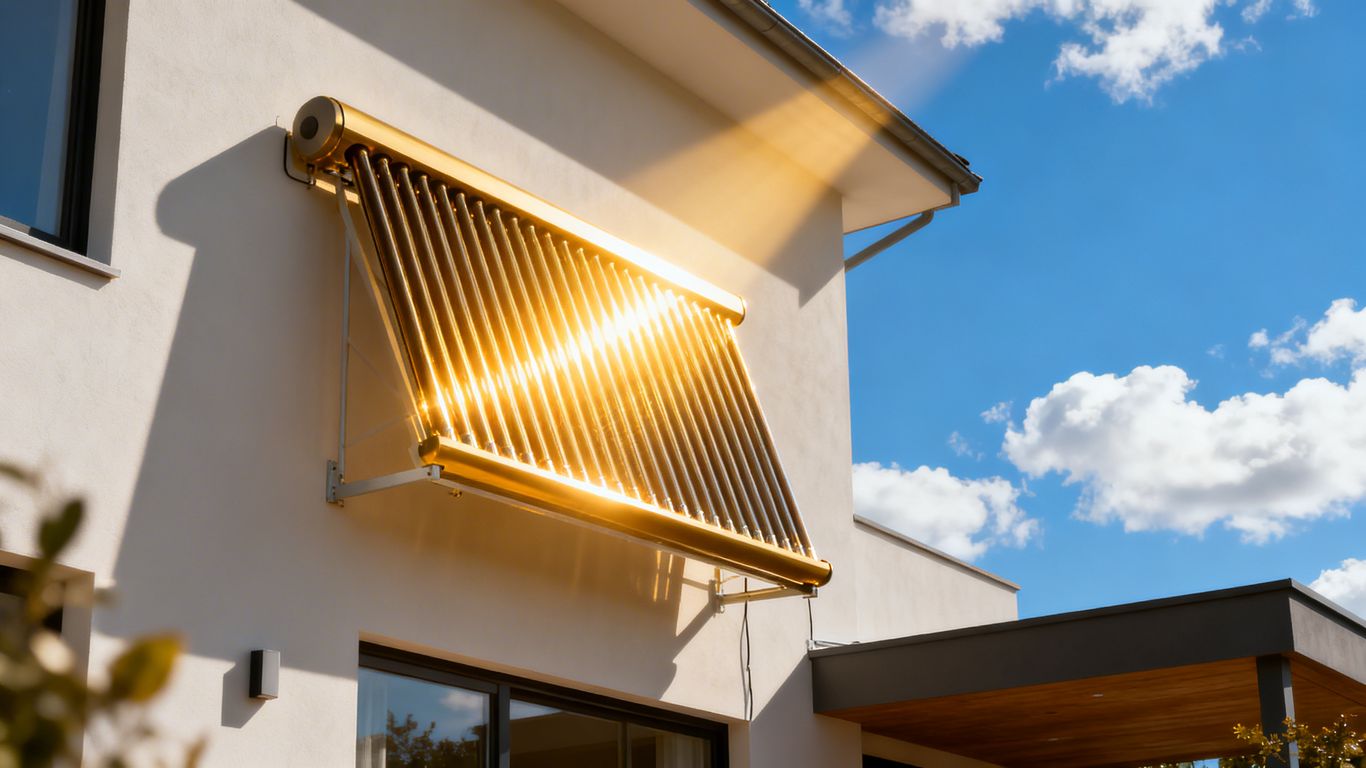
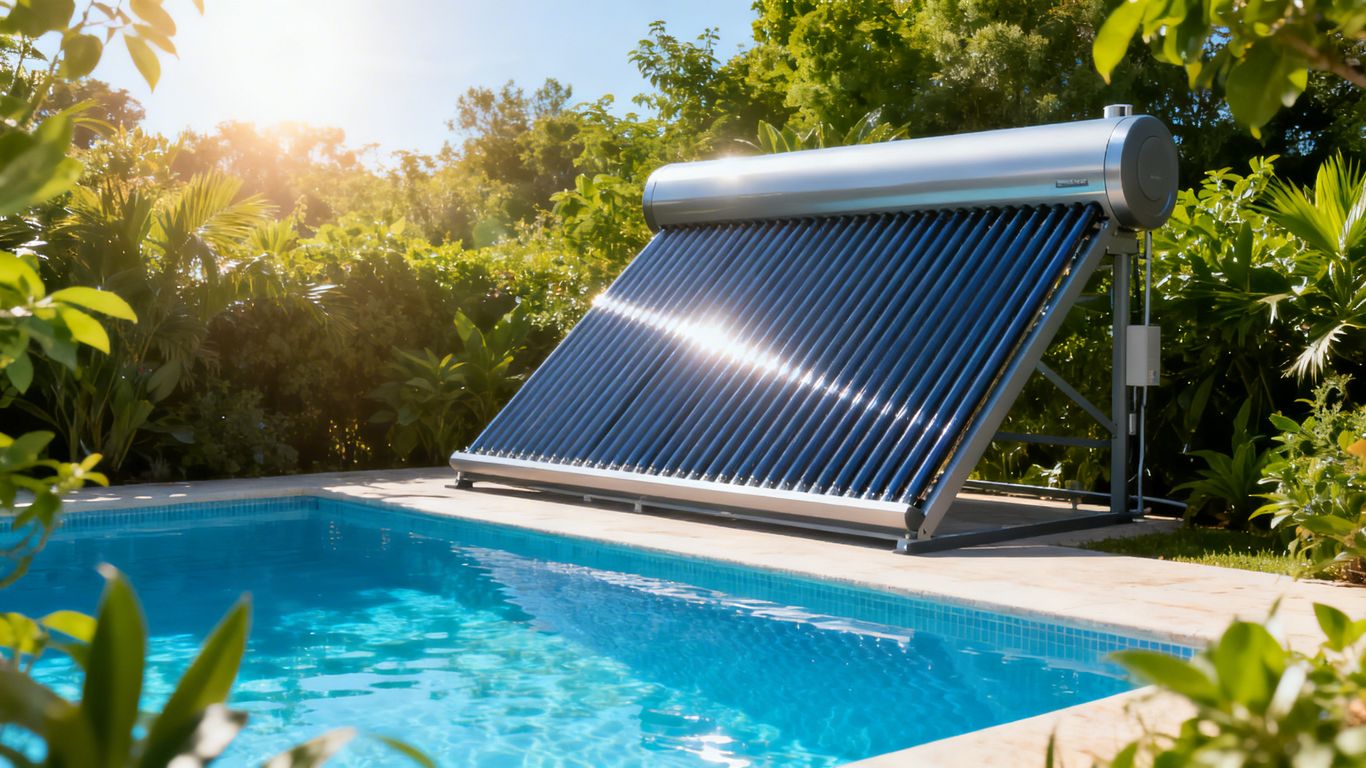
These panels are pretty much the most direct system. They capture the sun’s heat and transfer it directly to your pool water. Imagine, the sun beats down on the panels, heating a heat transfer fluid inside, and this fluid then heats your pool water via a heat exchanger. It’s quite effective, especially if you already have thermal panels for your home, you can even connect them to your pool. This can add a few good degrees and extend the swimming season.
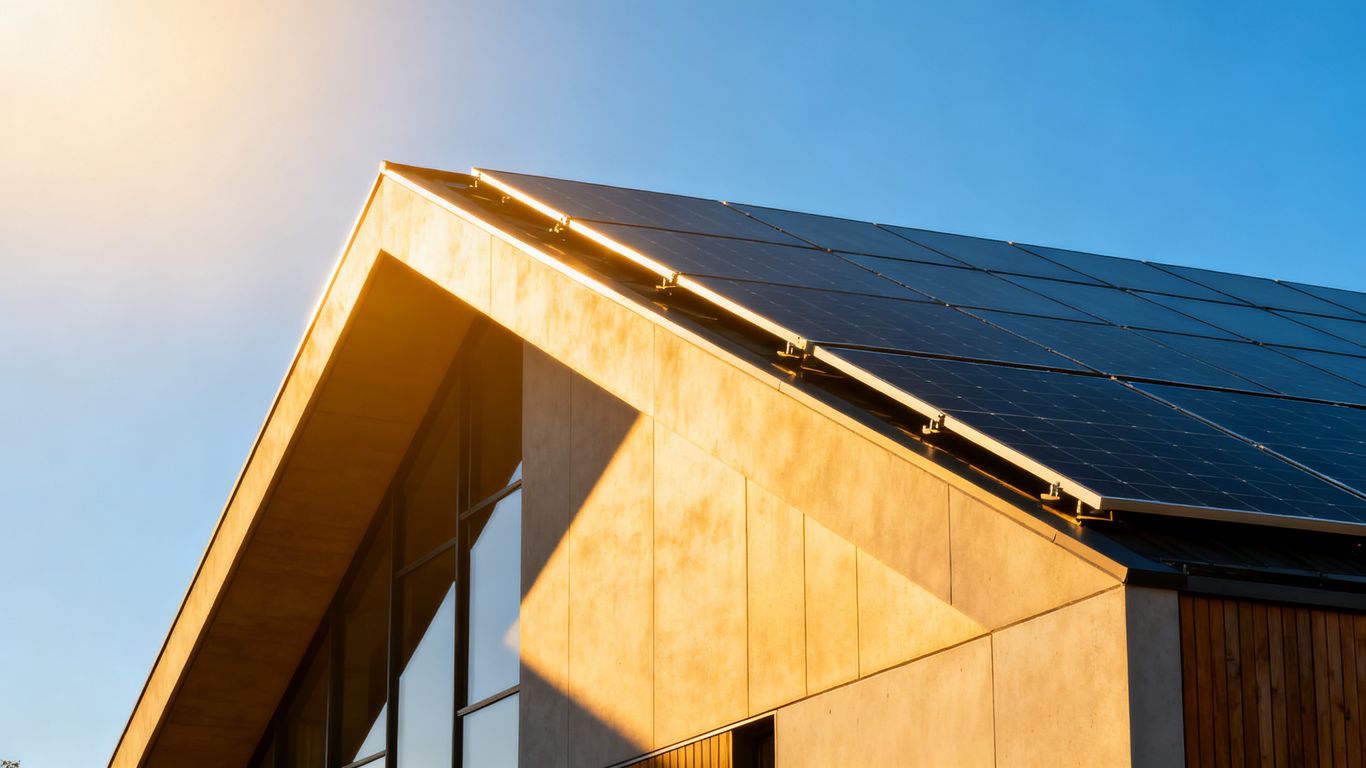
Here, we change the logic a bit. Photovoltaic panels, on the other hand, convert sunlight into electricity. This electricity can then power a heating system for your pool, such as an electric heat pump or an electric heater. This is an interesting option if you also want to use this electricity to run your pool’s filtration pump or lighting. Basically, you produce your own energy to heat the water, which can reduce your electricity bill. It’s a way to make your pool more energy-independent.
If you’re looking for simpler and often more affordable solutions, there are also solar covers, mats, and domes. The solar cover is the classic choice: you place it on your pool when you’re not using it. It protects the water, limits evaporation, and thanks to its bubbles, it captures some of the sun’s heat. It’s not the most powerful system, but it helps! Solar mats, or solar carpets, are a type of black tubing that you unroll in the sun and connect to your filtration system. The more you use, the more it heats. Solar domes are similar, with tubing coiled under a transparent dome that creates a greenhouse effect. These solutions are perfect for small pools or for giving an above-ground pool a little boost. They are easy to install and use, and their cost is often lower than that of panels.
Sizing your solar heating according to your pool’s size
So, you want your pool to be at the perfect temperature for swimming without shivering? That’s a great idea, and solar heating is great for that. But for it to work really well, you need to choose the right size system for your pool. It’s not complicated, but there are a few things to consider.
Calculating your pool’s surface area
The first thing is to know the size of your pool. And be careful, for solar heating, it’s mainly the *surface area* that matters, not so much the water volume. Why? Because heat escapes mainly from the surface, through evaporation. If your pool has a simple shape, like a rectangle, it’s easy: length x width. But if it has more unusual shapes, don’t panic! You can use online tools like Google Maps. Just switch to satellite mode, locate your pool, and use the measurement tool to trace its perimeter. This will give you the exact surface area. It’s a bit like drawing the outline of your pool on the map.
Matching the collector surface area to your water volume
Once you know your pool’s surface area, you need to choose the size of your solar collectors. Generally, it’s recommended that the total surface area of your solar collectors be between 50% and 100% of your pool’s surface area. For example, if your pool is 40 m², you’ll need between 20 m² and 40 m² of collectors. The exact choice will depend on what you want: just a little boost to heat the water, or to really extend the swimming season? The more you want to heat, the more collectors you’ll need. It makes sense, right? Manufacturers often provide specific guidance, so check their recommendations to choose your heater.
Which system for which pool size?
The type of solar system you choose also depends on the size of your pool, especially if it’s above-ground.
- For small above-ground pools (up to 20 m³): Often, a few solar mats or a solar dome are sufficient. It’s simple and effective.
- For slightly larger pools (up to 30 m³): You can opt for two solar domes.
- For more substantial pools (up to 50 m³): Three solar domes can do the job, or you can switch to thermal solar panels.
- For very large pools (up to 100 m³): You’ll need more collectors, like four solar domes, or thermal solar panels. Sometimes, a heat pump can also be a good complementary option.
It’s important to note that these figures are averages. Your climate, your pool’s exposure to sun and wind, all play a role. It’s better to plan for slightly larger than not enough, especially if you want to enjoy your pool for longer during the year.
Basically, the larger your pool, the more solar collectors you’ll need. Also, consider how you want to use your pool: just for a few extra weeks in the summer, or to really extend the swimming season from spring to autumn? That changes the sizing.
Considering your environment for optimal heating
Hi! For your solar pool heating to work best, you need to look around you a bit. It’s not just about putting panels in the sun; there are a few details that make all the difference.
The importance of your geographical location
Where do you live? It makes a difference, you know! The sun doesn’t shine the same everywhere in France. If you’re in the south, you already have a natural advantage. In the north, you might need to compensate a bit more. Think about checking the sunshine hours in your region; this will help you better size your collector surface area. It’s like choosing your clothes: you don’t dress the same in Nice and Lille, do you?
Your pool’s exposure to sun and wind
Okay, we know the sun is essential. But how is your pool positioned in your garden? Is it in full sun all day, or is it hidden by trees or a wall? A well-exposed pool will naturally gain degrees. And wind, well, that’s a bit of an enemy of heat! Water evaporates faster when it’s windy, so you lose the heat you worked so hard to produce. If your pool is often windy, a cover or shelter becomes almost essential.
Your pool water is a bit like a cup of tea: if you leave it out in the open and it’s windy, it cools down much faster. It’s the same logic for your pool. Heat escapes from the surface, especially when the air is moving.
In-ground or above-ground pool: what’s the difference?
So, is your pool dug into the ground or placed on top of it? That can have a small influence. Above-ground pools, for example, are sometimes more exposed to wind because they are lower. Infinity pools have a filtration system that can lead to more heat loss and are sometimes less compatible with standard thermal covers. You just need to be aware of this to adapt your installation.
Here are a few points to keep in mind:
- Sunshine: The more your pool is exposed to the sun, the less solar collector surface area you’ll need.
- Wind: A pool sheltered from the wind will retain its heat better. Consider windbreaks if possible.
- Pool type: Infinity pools may require special attention for heat management.
Optimising your solar heating installation
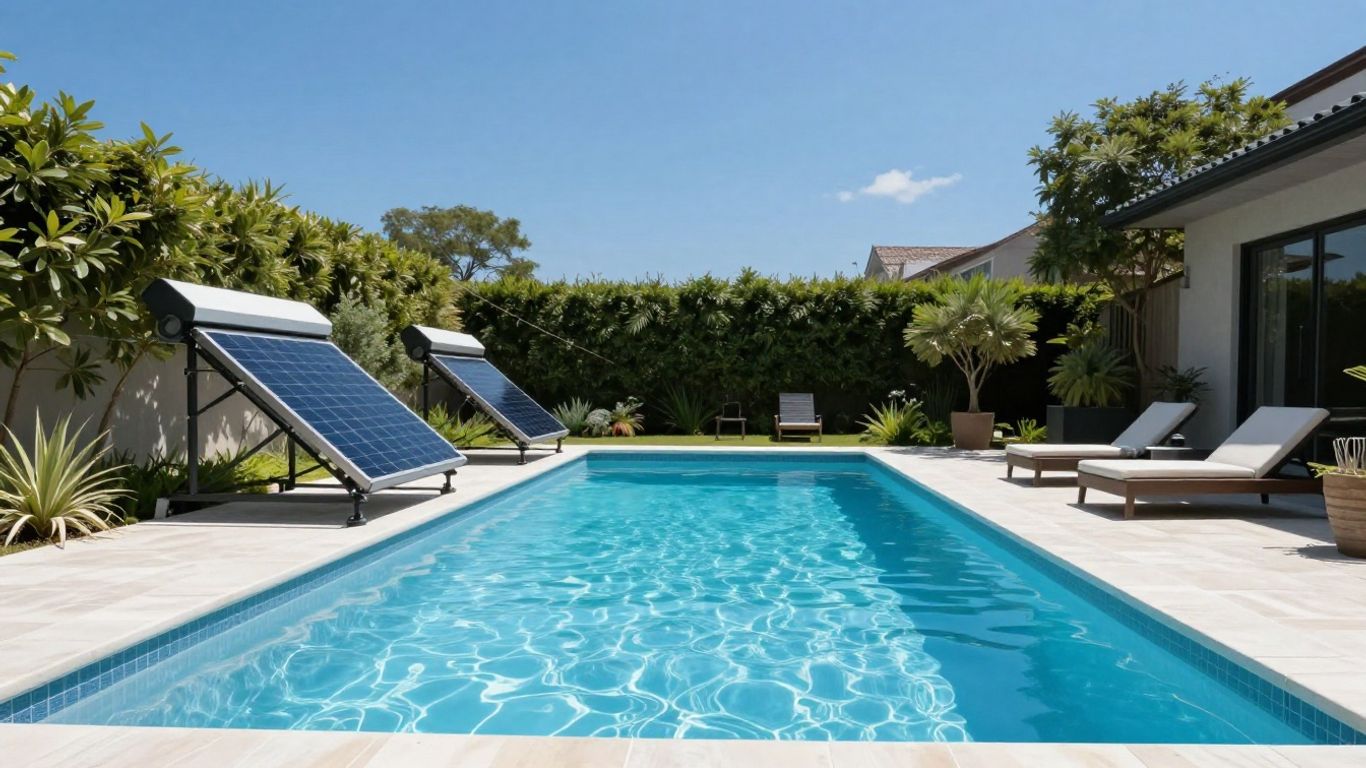
Once you’ve chosen the perfect solar heating system for your pool, it’s time to think about how to install it for optimal performance. It’s a bit like adjusting an antenna for the best TV reception; you need to find the right angle and the right spot.
Ideal panel orientation and tilt
For your solar panels to give their maximum output, they should be oriented towards the south. That’s where the sun shines strongest, especially in the Northern Hemisphere. The tilt is a bit more subtle. If your panels are ground-mounted, you have more freedom to adjust them. A tilt of around 30° is often recommended, but this can vary depending on your region. If you install them on a roof, the natural tilt of the roof may be sufficient, but check anyway. The idea is for the water to circulate slowly enough in the panels to have time to heat up properly.
Minimising pressure loss: distance and plumbing
Pressure loss is a bit of an enemy to your system. It occurs when water struggles to circulate through pipes due to length, bends, or too small a pipe diameter. The longer the water has to travel, the more pressure and heat it loses. Therefore, it’s best to install your solar heating system as close as possible to the pool and the technical room. The fewer pipes, the less loss. Be sure to measure all distances: pool/heater, heater/technical room, and pool/technical room. This will help you choose the right equipment and avoid unpleasant surprises.
Administrative procedures for installation
Before you jump headfirst into installation, especially if you plan to install panels on the roof, you need to go through the local council. A prior declaration of works is often required. Rules vary from one municipality to another, and in some areas, they are very strict. Ignoring these procedures can be costly: you could be forced to dismantle everything, with no refund. It’s best to inquire beforehand to avoid trouble.
Here are a few points to check before you start:
- Check your municipality’s urban planning regulations.
- Find out about any constraints related to listed sites or historic buildings.
- Anticipate the time it takes to obtain authorisations; it can take time.
Installing a solar heating system for your pool is a great project to enjoy your pool for longer while doing your bit for the planet. But for it to work really well, the installation needs to be done carefully. Thinking about orientation, pipe distance, and permits makes all the difference between a system that works halfway and one that provides you with perfectly warm water.
Extending the swimming season with your solar heating
Want to enjoy your pool for longer during the year? Solar heating is a great option for that! It allows you to gain a few precious degrees and extend the period when you can swim, without your energy bill skyrocketing. It’s a smart way to get a return on your pool investment.
Defining your needs: a few months or all year round?
Before you start, think carefully about how you want to use your heated pool. Is it just to have more pleasant water during the hottest few weeks of summer? Or do you dream of being able to take a dip from spring right through to autumn? Your expectations will directly influence the size and type of solar system you’ll need.
- For extended summer comfort (2-3 months): A solar collector surface area representing about 50% of your pool’s surface area may be sufficient. The idea is to give a little boost to the temperature during the hottest period.
- For a longer season (4-6 months): If you’re aiming for a longer swimming period, covering a good part of spring and autumn, you’ll need to aim bigger. A collector surface area of 60% to 80% of your pool’s surface area will be more appropriate.
- For almost continuous use (8-10 months): If your goal is to maximise the use of your pool over a very long period, you’ll need a substantial installation. Plan for a solar collector surface area that covers 85% to 100% of your pool’s surface area. This is the most ambitious option.
Matching the collector surface area to the duration of use
As we’ve just seen, the surface area of your solar collectors is the key point. The more you want to heat your pool and the longer you want to do it, the more collectors you’ll need. It’s a matter of direct proportionality. Think of it like filling a bathtub: the bigger it is, the more water you need! The sun does the work, but you need to give it enough
Maintaining your solar heating system
Even though solar pool heating systems are known for their low maintenance needs, a little help from time to time allows them to function at their best and last longer. It’s not rocket science, and it won’t take you hours!
Regularly cleaning covers, mats, and domes
These simpler solutions, like bubble covers, solar mats, or domes, need to be clean to effectively capture the sun’s rays. Imagine: if they’re all grubby, they won’t heat as well! A simple wipe with a sponge or a water jet is often enough. When you put them away for winter, make sure they are completely dry before storing them. This avoids unpleasant surprises like mould in the spring. Nobody wants to take out a musty cover, do they?
Rinsing solar panels for better performance
For thermal or photovoltaic solar panels, a quick rinse from time to time can make a difference. If the rain isn’t enough to dislodge dust or leaves that have settled on them, a blast from a garden hose will do the trick. A clean surface means optimal performance. This ensures that the maximum amount of sunlight is captured to heat your water.
Checking filters on associated systems
If your solar heating system is coupled with a heat pump or other equipment, remember to check the filters. A clogged filter can slow down the whole system and make it less efficient. It’s a bit like forgetting to change your vacuum cleaner’s filter; it won’t suck as well afterwards! Check your equipment’s manual to find out how to access and clean these filters. It’s a quick step that ensures everything works in harmony.
Regular maintenance of your solar system is a bit like taking care of your pool: it requires a little attention, but the result is well worth it. Fewer worries, more enjoyable swims!
Taking care of your solar system ensures it functions well and lasts a long time. A little regular maintenance can make a big difference to your installation. Want to know more about how to keep your system in top condition? Visit our website to discover our practical tips and advice.
So, ready to take the plunge?
There you have it, we’ve covered it all! Choosing the right solar heating for your pool might seem a bit complicated at first, but with all this information, you should have a clearer picture. Whether you have a small above-ground pool or a large in-ground pool, there’s definitely a solar solution that will allow you to enjoy the water for longer, without your electricity bill exploding. Don’t forget to consider your pool’s size, your region’s sunshine, and your desire to extend the swimming season. With a little thought, you’ll find the perfect system to keep your water at the ideal temperature. Go ahead, it’s your turn to have great swims!
Frequently Asked Questions
What is the difference between a thermal solar panel and a photovoltaic solar panel for my pool?
It’s simple: the thermal panel directly heats your pool water, like a giant coil. The photovoltaic panel, on the other hand, generates electricity. This electricity can then be used to power an electric heater for your pool. Both have a long lifespan, but the investment isn’t the same!
How do I choose the size of my solar heating system for my pool?
Your pool’s size is super important! For small above-ground pools, a mat or a solar dome might be enough. For larger pools, you’ll need to consider several mats, several domes, or even thermal solar panels. We often calculate a collector surface area that represents a good portion of your pool’s surface area, but it also depends on whether you just want a little warmth or to extend your swimming season.
Does where I live make a difference for my solar heating?
Absolutely! If you live in the south, you’ll get more sun than in Brittany, for example. This means you might need more solar collectors if you’re in a less sunny region to get the same water temperature. Your pool’s exposure to sun and wind in your garden also counts a lot.
Is my pool in-ground or above-ground, does that make a difference for solar heating?
Yes, it makes a bit of a difference! An in-ground pool retains heat better thanks to the surrounding earth. An above-ground pool, with its thinner walls in contact with the air, loses heat more easily. Therefore, you might need to plan for a slightly more robust system for an above-ground pool to compensate.
How do I make sure my solar panels heat as well as possible?
For your solar panels to give their maximum output, they need to be placed correctly. Ideally, they should be oriented south and exposed to the sun all day. If you install them on a roof, a slight tilt (around 30°) helps the water heat up properly. And the closer they are to your pool, the less energy is lost in the pipes!
Do I need to do special maintenance for my solar heating?
It’s quite simple! For solar covers, mats, and domes, just clean them from time to time so they continue to capture the sun well. For panels, a quick rinse with water if dust accumulates is enough. And if you have an associated heat pump, just check its filters. Nothing too complicated!