Are you wondering if polycrystalline panels are right for you and your project? That’s a great question! We see these panels everywhere, and for good reason, they have quite a few advantages. But like everything, they have their little flaws too. So, for what purpose are they really the most suited? Let’s take a look together, without any hassle.
Key Points to Remember
- Polycrystalline panels are made from several silicon crystals melted together, which gives them a non-uniform blue appearance and makes them more affordable.
- Their manufacturing process is more environmentally friendly because it uses silicon scraps, reducing waste and energy consumption compared to monocrystalline panels.
- They handle high temperatures well, which can be an asset in very sunny regions, even if their efficiency decreases when it gets too hot.
- Their efficiency is slightly lower than that of monocrystalline panels, especially when it’s overcast or when the temperature rises too much.
- They’re perfect for reducing your electricity bill and producing your own green energy, especially if you live in an area with plenty of sunshine and budget is an important factor.
What is a polycrystalline panel?
So, you’re wondering what exactly a polycrystalline panel is, huh? It’s super simple actually. Imagine you want to produce your own electricity using the sun. Polycrystalline panels are one of the solutions for that.
A manufacturing process using silicon crystals
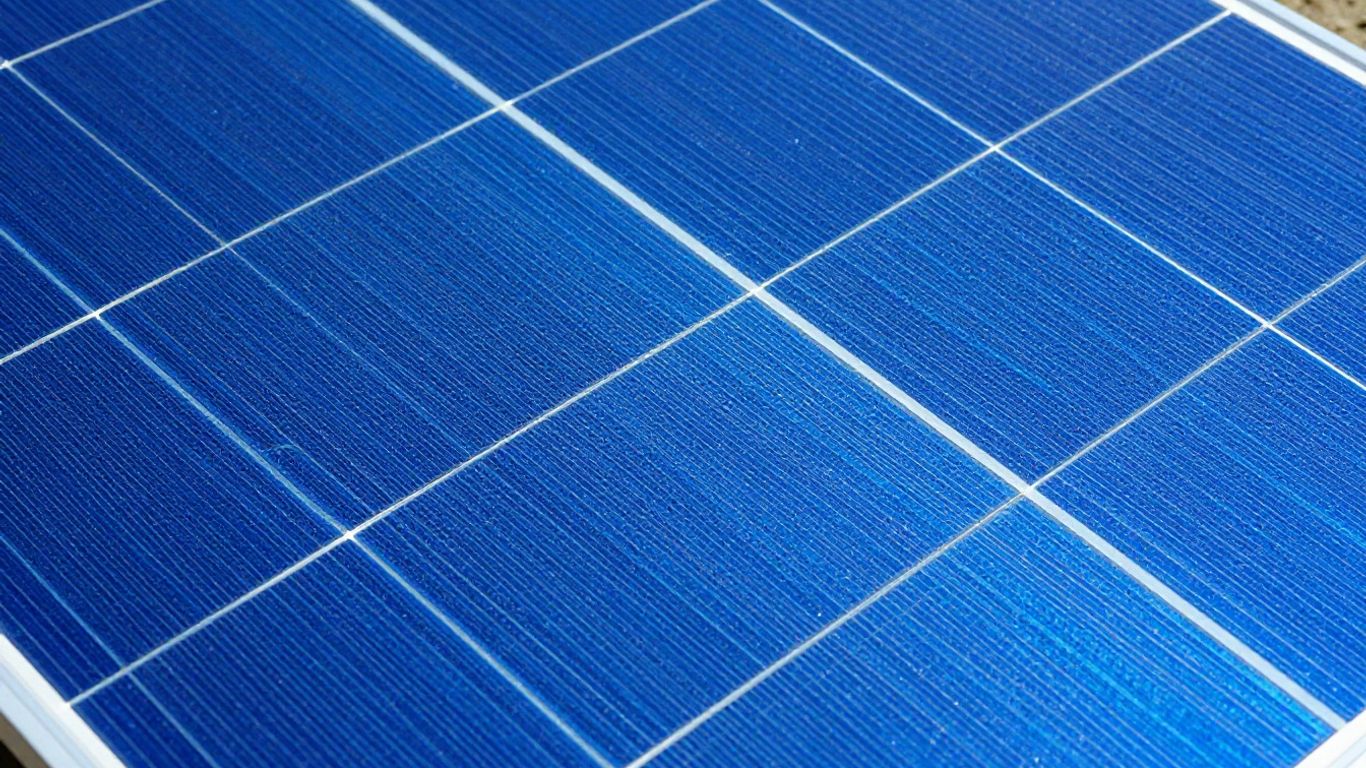
To put it simply, these panels are made from silicon, just like the chips in your computer. Except here, we use several pieces of silicon that are melted together. That’s why we say “poly,” it means “multiple.” These melted pieces are then poured into a square mold and cool down. During this cooling process, silicon crystals form in a somewhat disorderly manner, resulting in this particular texture.
A recognizable appearance
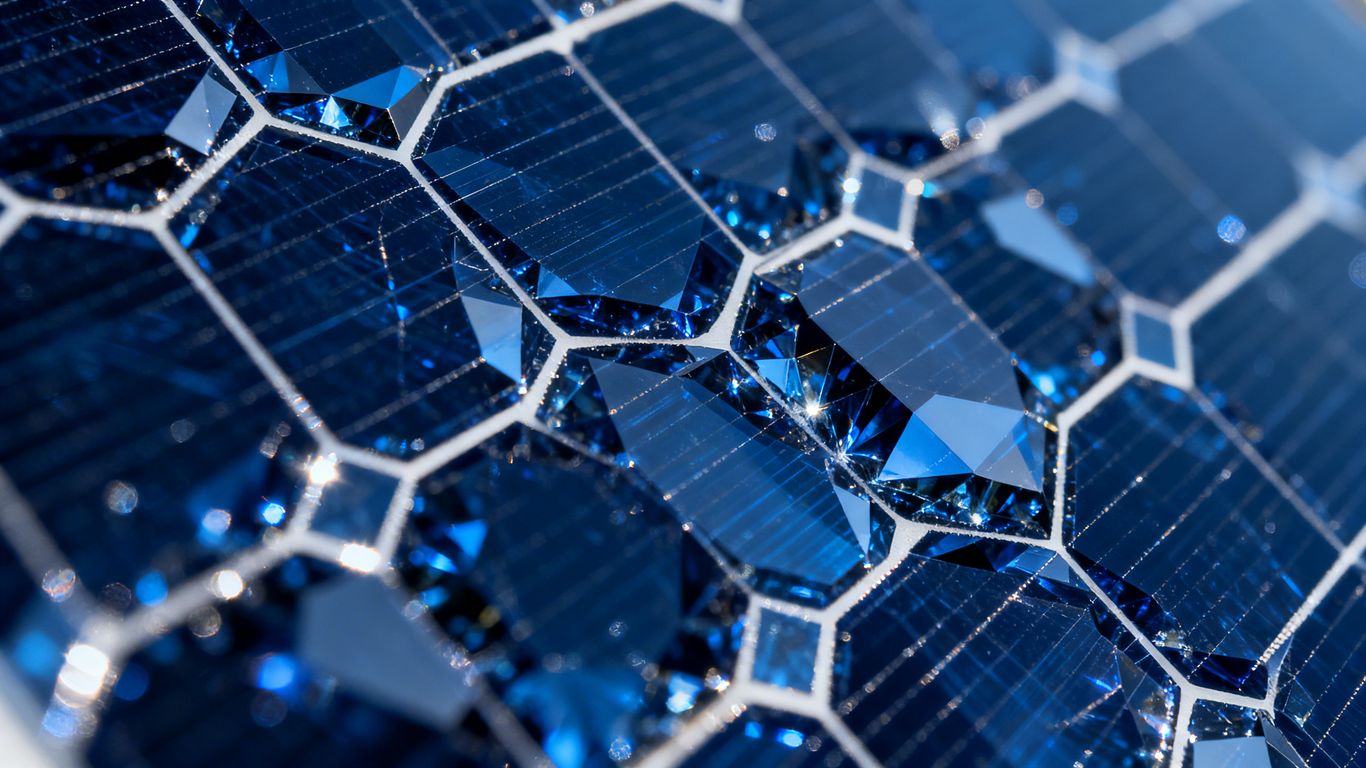
You’ll recognize them quickly! Unlike monocrystalline panels that are all black and uniform, polycrystalline panels have a fairly distinctive blue color. And it’s not a solid blue, no. You’ll see little sparkles, almost like looking at snowflakes. This is due to the structure with several crystals that aren’t perfectly aligned. It’s a bit less
The advantages of polycrystalline panels
A more affordable purchase cost
When considering the installation of solar panels, the budget is often a major concern. And that’s where polycrystalline panels show one of their greatest strengths: their price. They are generally cheaper to purchase than their monocrystalline counterparts. Why? Simply because their manufacturing is less complex. We use fragments of silicon, often derived from the scraps of monocrystalline panel production, that are melted together. This process requires less pure silicon and less energy, which directly affects the final cost. It’s a more accessible option to start generating your own green electricity and lowering your bills. It’s a bit like choosing a good value-for-money for your solar investment.
A more eco-friendly manufacturing process
Speaking of manufacturing, it’s another strong point of polycrystalline panels. As I mentioned, their production uses silicon scraps. This means recycling and wasting less raw material. Furthermore, the manufacturing process itself requires less energy than that for monocrystalline panels. Less energy consumed means less impact on the environment. So, it’s a choice that can help you reduce your carbon footprint while producing electricity. It’s a more planet-friendly approach, and that’s pretty good news, right?
Good resistance to high temperatures
We often think that solar panels don’t like heat, but it’s a bit more nuanced. Polycrystalline panels have an interesting characteristic: they handle high temperatures quite well. Unlike other technologies that may see their efficiency significantly drop when it’s really hot, polycrystalline panels perform better. Of course, like any electronic equipment, extreme heat is never ideal, but their composition gives them a certain robustness against the hottest summer days. This is a notable advantage, especially if you live in an area where the sun shines hard.
Polycrystalline panels offer a good compromise between cost, environmental impact, and performance, especially in warm climates.
The limitations of polycrystalline panels
A slightly lower energy output
Okay, let’s be honest, polycrystalline panels aren’t the champions of efficiency. Their effectiveness typically falls between 12% and 17%. This means they convert a smaller portion of the solar energy they receive into usable electricity compared to their monocrystalline cousins. It’s not the end of the world, especially if you live in a super sunny region, but it’s a point to keep in mind.
A less uniform aesthetic
You probably noticed their look: a somewhat speckled blue color, not super uniform. This is due to how they are made, with many small crystals of silicon melted together. If visual appearance is really important to you and you want a very sleek look, this could be a bit disappointing. They are less discreet than monocrystalline panels, which have a uniform black color.
A sensitivity to weather conditions
These panels love the sun, and a lot! They perform better when it’s nice and warm. However, when the sky is overcast or it’s very cold, their electricity production can decrease more significantly than that of other types of panels. So you need to consider the sunlight in your area before making a decision.
In short, if you’re looking for maximum absolute performance and an ultra-modern look, polycrystalline panels may not be your first choice. But for a good value-for-money, especially in sunny areas, they remain a very interesting option.
Where to install your polycrystalline panels?
Ideal for sunny regions
For your polycrystalline panels to perform at their best, they need sunlight, and not just a little! They are truly made for places where the sun shines strong and long. Think of the south of France, for example. The more sun there is, the more you produce green electricity. It’s pretty logical, right?
Don’t forget that the ideal laboratory conditions, such as a temperature of 25°C and an exposure of 1000 W/m², don’t always occur in real life. The performance of your panels will depend on many factors: where you live, the orientation of your roof, and even the weather! But in good conditions, polycrystalline panels work super well.
The importance of orientation and tilt
Once you’ve chosen the location, you need to think about how your panels will be placed. Orientation and tilt are super important for capturing the maximum amount of sunlight. Ideally, they should face due south, but that’s not always possible. The tilt depends on your region and the season. Generally, a tilt between 30 and 35 degrees is a good starting point. If you place your panels on a flat roof, you have more freedom to choose the perfect angle. It’s a bit like adjusting an antenna for the best reception! If you want to learn more about the choice of solar panels, there’s plenty of info to help you decide.
To optimize all of this, here are a few points to consider:
- Orientation: South is king, but southeast or southwest can also work very well.
- Tilt: Adjust it to your latitude to capture sunlight the best throughout the year.
- Shading: Be careful of trees, neighboring buildings, or other obstacles that could shade your panels; even a little shade can reduce production.
- Ventilation: Make sure there’s space under the panels for air to circulate. This helps keep them cool and improves production.
Polycrystalline panels: for what use?
You’re probably wondering if polycrystalline panels are suitable for your situation. Here’s a little decoding to help you see more clearly.
To power your home with green electricity
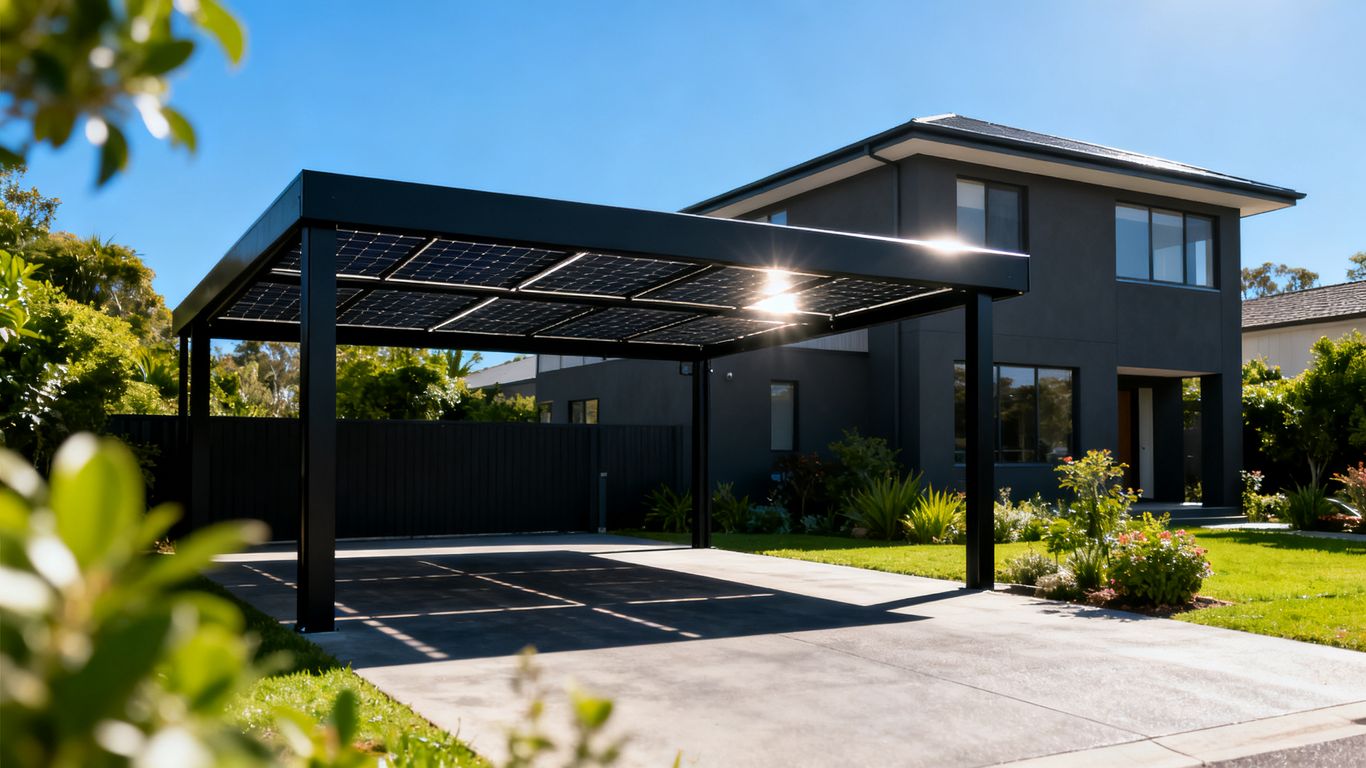
Installing polycrystalline panels is primarily a practical way to produce your own energy. You install the modules on your roof (or, why not, in your garden) and sunlight takes care of the rest. The electricity generated acts as a direct supply for all your devices:
- Washing machine
- Computer
- Refrigerator
- Lighting, etc.
Sure, their efficiency is a bit lower than monocrystalline panels, but when sunlight is on point, they get the job done without issues. It’s an affordable option to start self-producing without breaking the bank.
By choosing polycrystalline panels, you are smoothly transitioning to energy autonomy without disrupting your daily life.
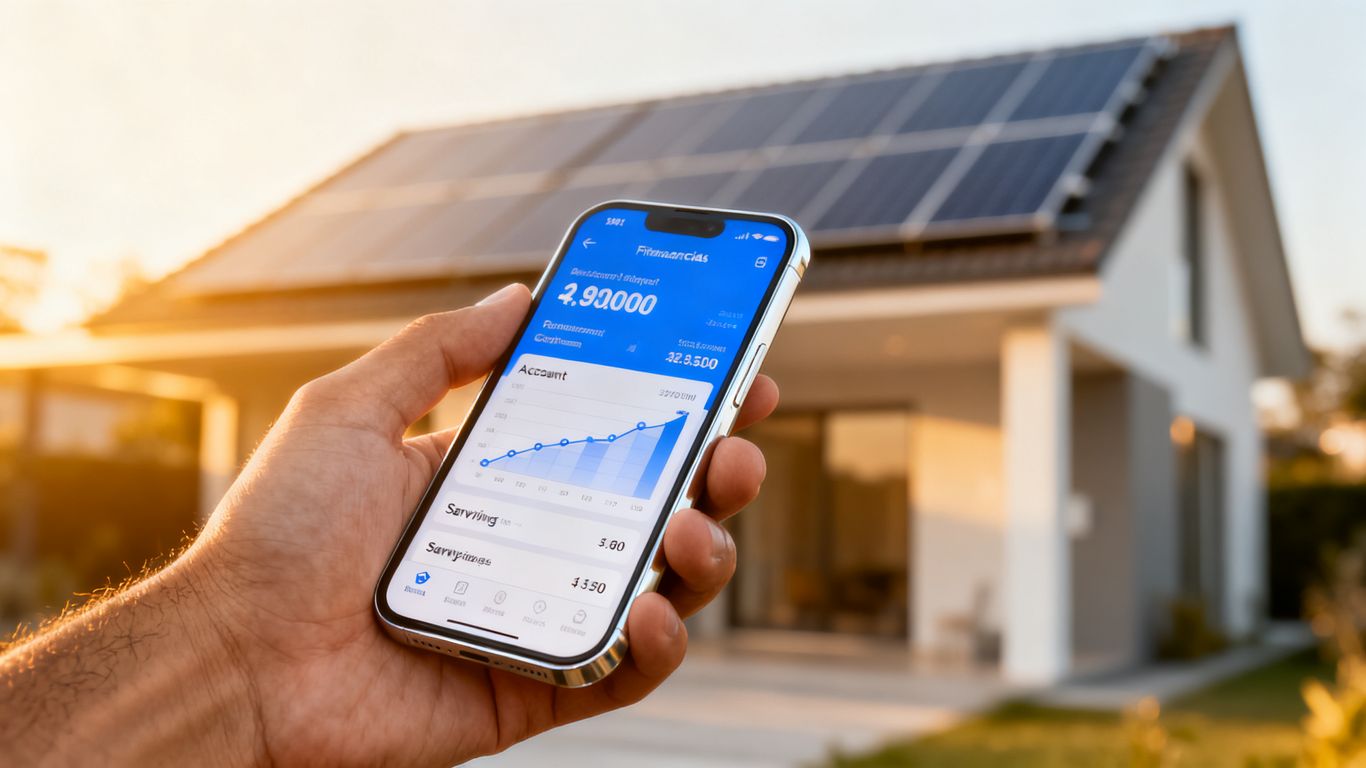
To reduce your electricity bill
There’s nothing more satisfying than seeing your electricity bill drop thanks to what falls from the sky! Here’s how polycrystalline panels help you:
| Annual production | Estimated savings (*/year) |
|---|---|
| 3,000 kWh | 450 – 600 € |
| 6,000 kWh | 900 – 1,200 € |
The amount depends on your installation, local climate, and your habits. But the savings are real! Moreover, many households are already benefiting from these more effective technologies that have recently evolved.
To inject your surplus into the grid
When you produce more than you consume, there’s no reason to waste that bonus! In France, you can inject this surplus into the public grid, which earns you a little extra income. Many providers offer to buy back the unused kWh. The ideal?
- Maximize your installation to cover your needs
- Manage your consumption during the day
- Sell what you don’t use
This allows you to recoup your investment faster and contribute to the collective effort, especially when the sun is shining hard and your production is booming.
In summary, polycrystalline panels are perfect if you want to simply get into solar energy, reduce your bills, and even lend a hand to the grid. This isn’t the ultimate solution for every situation, but for many, it checks quite a few boxes!
The maintenance of your solar panels
A natural maintenance thanks to rain
Good news for you: your polycrystalline solar panels generally don’t require intensive cleaning. In France, rain and wind already do a great job of removing dust and dirt. It’s a bit like nature taking care of the heavy lifting! So, don’t panic if you see some marks; it’s often temporary.
Monitoring your production
What’s really important is keeping an eye on what your panels are producing. Most modern installations come equipped with monitoring devices that allow you to check in real-time the performance of your system. It’s super handy for quickly spotting a drop in production that could indicate an issue. Remember to take a look from time to time, just like you would check the dashboard of your car. If you notice something unusual, it might be worth checking for blockages or more serious problems. Sometimes, a simple debris caught on part of the panel can be enough to reduce your output. It’s also advisable to check the condition of the cables and mounts, especially after heavy weather, to ensure everything is in place and showing no signs of wear. Minimal preventive maintenance can prevent more costly issues later on and ensure the longevity of your solar installation. Don’t hesitate to regularly review the production data of your installation to ensure everything is functioning optimally.
For your solar panels to work their best, a little regular maintenance is enough. This ensures they produce maximum clean energy for you. Want to know how? Visit our website to discover our simple and effective tips!
Conclusion
There you go, you now know what polycrystalline panels are for and in which situations they are really interesting. If you live in a sunny region and want to get into solar energy without blowing your budget, it’s definitely an option to consider closely. Their manufacturing is simpler, they cost less, and on top of that, they are a bit more eco-friendly. Well, it’s true, they don’t have the efficiency of monocrystalline panels, but for many households, they do the job perfectly well. If you’re still hesitating, take the time to compare offers and see what best suits your home and your electricity consumption. In any case, switching to solar is already a great step towards more autonomy and a small gesture for the planet. It’s your turn to act!
Frequently Asked Questions
What is a polycrystalline panel?
Imagine a solar panel made of lots of little melted silicon pieces. That’s it, a polycrystalline panel! It gives it a slightly mottled look, often dark blue, different from the smooth black panels. They are great for converting sunlight into electricity for your home.
Why choose a polycrystalline panel?
The big advantage is that these panels are cheaper to make, so they’re more affordable for you. Plus, their manufacturing uses less energy and recycles silicon scraps, which is better for the planet. They also perform quite well in heat.
Do they produce as much electricity as other panels?
They are a bit less efficient than their monocrystalline cousins, especially when there’s less sun or when the sky is overcast. Their efficiency, which is the amount of electricity they convert, is somewhat lower. But in a well-sunny spot, they still do the job!
Where should they be installed?
These panels love the sun! So, they are perfect for regions with plenty of light, like the south of France. You also need to think about how to orient them, ideally towards the south, and give them a slight tilt to capture the maximum rays.
What is the actual purpose of having polycrystalline panels?
With these panels, you can produce your own clean electricity! This allows you to lower your electricity bill and even sell the electricity you don’t consume to the grid. It’s a good way to save money while helping the environment.
How do you take care of these panels?
No worries, nature often takes care of it! Rain and wind already clean off a lot of dust. You can also monitor their operation with little devices. If you see an unusual drop in production, you can check if they need a little cleaning, but that’s not every day.